EXF OPTICALNetwork components Project brief
Optical reference library

How is the Fibre Channel solution implemented

How is the Fibre Channel solution implemented
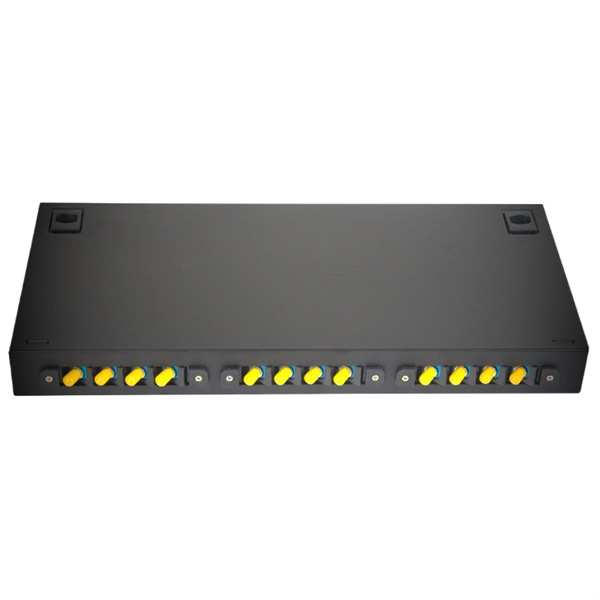
Illustrative equipment reference
Download PDF
Article contents

Fibre Channel solutions are implemented by connecting servers and storage in a SAN using high-speed, lossless networks with specific topologies and port configurations.

Overview

Fibre Channel (FC) is a high-speed network protocol designed for reliable, in-order, lossless data transfer between servers and storage in Storage Area Networks (SANs) ( ). It supports data rates from 1 Gbps up to 128 Gbps and can run over optical fiber or copper cabling ( ).

F

C is widely used in enterprise data centers for high-performance storage access, backup, and replication ( ).

Topologies

Fibre Channel can be implemented using three main topologies: Point-to-Point (P2P): Direct connection between two devices using N_Ports. Each connection provides full bandwidth and is simple to configure ( ). Arbitrated Loop (FC-AL): Devices are connected in a loop or ring.

Only one pair of devices can communicate at a time. This topology is largely deprecated in modern deployments ( ). Switched Fabric (FC-SW): Devices connect through Fibre Channel switches, forming a scalable fabric.

This topology supports tens of thousands of ports, allows multiple concurrent communications, and is the preferred modern implementation ( ).

Port Types and Roles

Fibre Channel nodes use ports to interface with the network. Key port types include ( ): N_Port (Node Port): Connects a server or storage device to the fabric. Can be assigned a World Wide Port Name (WWPN) and supports NPIV for virtualization.

F_Port (Fabric Port): Switch port connecting to an N_Port. E_Port (Expansion Port): Connects switches to each other to expand the fabric. NL_Port (Node Loop Port): N_Port operating in a loop.

FL_Port (Fabric Loop Port): Connects NL_Ports to a switch in a loop. G_Port (Generic Port): Can function as either E_Port or F_Port depending on initialization. U_Port (Universal Port): Unassigned port awaiting role determination.

Implementation Steps

Hardware Setup: Install servers with Host Bus Adapters (HBAs), storage arrays, and Fibre Channel switches. Use certified optical transceivers for high-speed links ( ). Topology Configuration: Choose the appropriate topology (point-to-point, loop, or switched fabric) based on scalability and performance requirements ( ).

Port Assignment: Configure N_Ports on servers and storage, F_Ports on switches, and E_Ports for inter-switch links.

Assign WWP

Ns and enable NPIV if needed ( ). Fabric Zoning: Define zones in the fabric to control which devices can communicate, enhancing security and performance. Testing and Validation: Verify connectivity, bandwidth, and failover mechanisms.

Ensure lossless data transfer and proper frame flow as per FC-2 protocol ( ). Monitoring and Management: Use switch management tools and CLI commands to monitor port status, fabric health, and performance metrics.

Key Considerations

Optical Transceivers: Use high-quality, certified SFP/SFP+ modules to prevent errors and hardware damage ( ). Scalability: Switched fabric topology allows expansion to thousands of ports without performance degradation. Redundancy: Implement redundant paths and multipathing to ensure high availability.

Protocol Support: FC can transport SCSI (FCP), FICON for mainframes, and NVMe commands for modern storage ( ). By following these steps and best practices, enterprises can implement a robust, high-speed Fibre Channel SAN that ensures reliable, low-latency access to storage resources.

Fundamentals of Fibre Channel It is a high-speed fibre channel [FC] topology in which fibre channel ports/hubs use arbitration to establish a point-to-poin.

From reference to enquiry

Questions for your project

Use these editorial prompts alongside the linked excerpts. They identify items to confirm for your project.

Detailed reading

Distribution and installation references

Fundamentals of Fibre Channel

It is a high-speed fibre channel topology in which fibre channel ports/hubs use arbitration to establish a point-to-point circuit and prevent multiple ports/hubs from sending frames at

Inside a Modern Fibre Channel Architecture – Part 1

Fibre Channel may be implemented using any combination of the following three topologies: a point-to-point link between two ports a set of ports interconnected by a switching

Fibre Channel: The Silent Guardian of Your Data Solution Brief

Brocade Fibre Channel networks form the invisible backbone of today''s mission-critical data centers. It delivers secure, high-speed, and lossless connectivity between servers and storage. Engineered

Fibre Channel

Fibre channel likes to present itself as a generic transport mechanism with a multi-functional set of layers. The highest layer, FC-4, allows other channels and networks, such as IPI,

Fibre Channel: The High-Speed Backbone of Your Data Center

This article dives into what makes Fibre Channel a persistent leader in storage area networks (SANs), its key advantages, and how choosing the right components—like high

Fibre Channel Industry Association

Roadmap Illustration Fibre Channel has a laser-focus on speed and continues to progress at a blistering pace. Fibre Channel is continually evolving to higher speeds to meet the high

Mastering Fibre Channel: Everything You Need to Know About This

What makes Fibre Channel an industry-leading protocol for massive storage infrastructure? It is the goal of this article to explains the fundamentals principles, benefits, and use

The Foundations of Fibre Channel Architecture — Unveiling the

Fibre Channel tackles this through sophisticated flow control mechanisms that ensure no data frames are lost during transit. The primary method is buffer-to-buffer credit flow control, where the sender

Fibre Channel Layers

Fibre Channel is a high-speed data transfer protocol providing in-order, lossless delivery of raw block data. Fibre Channel is primarily used to connect computer data storage to servers in

Fundamentals of Fibre Channel

Fibre Channel is a high-speed network technology used to connect server to data storage area network. It handles high performance of disk storage for applications on many corporate

Fibre Channel

Fibre Channel (FC) is a high-speed data transfer protocol providing in-order, lossless delivery of raw block data. Fibre Channel is primarily used to connect computer data storage to servers in

Fibre Channel: The High-Speed Backbone of Your Data Center

Fibre Channel remains the undisputed champion for high-performance, reliable, and secure storage networking. Its dedicated, lossless fabric is simply unmatchable by IP-based

Fibre Channel Tutorial – The Basics

Fibre Channel is a high speed networking technology primarily used for computer storage applications. Most of the larger datacenters that have implemented SAN technology have

Mastering Fibre Channel: Everything You Need to Know

The study defines the implemented security strategies and technologies of Fibre Channel SANs and explains the particular security issues

FIBRE CHANNEL SOLUTIONS GUIDE

FIBRE CHANNEL SOLUTIONS GUIDE fibrechannel State of the Fibre Channel Industry Today''s data explosion presents unprecedented challenges incorporating a wide range of application

FIBRE CHANNEL

ABOUT THE FCIA The Fibre Channel Industry Association (FCIA) is a non-profit interna-tional organization whose sole purpose is to be the independent tech-nology and marketing voice of the

WHAT IS FIBRE CHANNEL USED FOR?

Fibre Channel is the preferred protocol for data centers with mission-critical workloads requiring synchronous data mirroring.

What Is Fibre Channel? | Enterprise Storage Forum

Fibre Channel is a high-speed networking technology used to connect servers and storage devices. Learn more about Fibre Channel and how

Related Video Reference

This video was associated with the source search result. Verify technical details against current product documentation and project requirements.

Discuss your network project

Share the route, interfaces, cable or port requirements and acceptance scope.

Start a Project Enquiry