EXF OPTICALNetwork components Project brief
Optical reference library

Modular Design of Network Racks

Modular Design of Network Racks
Illustrative equipment reference
Download PDF
Article contents

Modular network racks are scalable, standardized enclosures designed for flexible, efficient, and future-ready IT infrastructure deployment.

Core Principles of Modular Rack Design

Scalability and Standardization: Modular racks follow the 19-inch rack format with defined rack units (U), ensuring compatibility across devices and vendors. They are pre-engineered for expansion, allowing a scale-as-you-grow approach without major redesigns or downtime. Standard heights like 42U, 45U, and 48U accommodate varying density requirements.

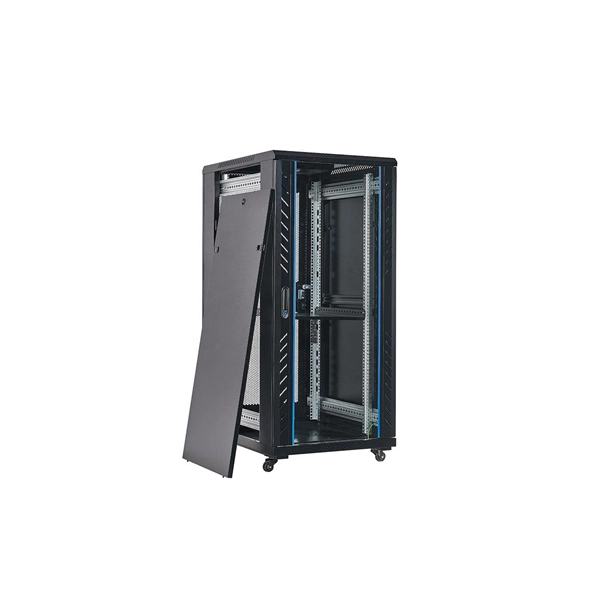
Structural Components: A modular rack includes a rigid frame, perforated front and rear doors for airflow, removable side panels, and grounding provisions. Reinforced mounting and anchoring options are used in seismic zones. Tool-less doors, adjustable leveling feet, and casters enhance accessibility and mobility.

Power and Cooling Management

Power Distribution: Modular racks integrate PDUs (basic or intelligent) and modular busway systems for flexible power expansion. Redundancy configurations improve reliability and uptime.

UP

S units are typically mounted at the bottom for stability and to handle high PoE++ loads. Airflow and Thermal Management: Efficient airflow is maintained using hot aisle/cold aisle containment, blanking panels, and proper sealing. High-density setups may require in-row cooling or rear-door heat exchangers.

Modern PoE++ switches generate significant heat, so racks must allow for ventilation and cooling planning.

Cable Management and Monitoring

Cable Organization: Vertical and horizontal cable managers prevent congestion, maintain accessibility, and respect bend radii for Cat6A and fiber cabling. Proper cable management reduces airflow obstruction and improves cooling efficiency. Monitoring: Environmental sensors track temperature, humidity, and power usage.

Remote monitoring enables proactive management and helps prevent downtime.

Flexibility and Customization

Modular Components: Racks can include adjustable frames, integrated cable management accessories, airflow optimization tools, and PDUs. This allows tailored configurations for specific workloads or environments. 3D-printable modular systems like HomeRacker offer parametric designs for custom setups, from small homelab racks to full 19-inch server racks.

Energy Efficiency: Modular racks optimize airflow, integrate with advanced cooling systems, and reduce energy consumption. Blanking panels and containment systems eliminate hotspots, while organized cabling enhances cooling efficiency.

Standards and Compliance

Modular racks comply with industry standards such as EIA-310-D for mounting dimensions, IP20 for environmental protection, UL 60950 for safety, and RoHS for hazardous substance restrictions. Compliance ensures interoperability, safety, and long-term reliability.

Benefits of Modular Design

Rapid Deployment: Faster installation and expansion compared to fixed racks.

Cost-

Effectiveness: Reduced upfront costs and lower expansion costs over time.

Future-

Proofing: Supports evolving technologies like Wi-Fi 7, 10Gbps backhaul, and high-power PoE++ devices. Maintenance Efficiency: Easy access for upgrades, repairs, and monitoring. In summary, a modular network rack design scheme emphasizes scalability, flexibility, and efficiency.

By integrating standardized enclosures, intelligent power and cooling management, organized cabling, and compliance with industry standards, modular racks provide a robust foundation for modern and future-ready IT infrastructure.

The Role of Open-Frame Network Racks in Modular, Scalable IT. Open-frame network racks have become an indispensable part of modern IT infrastructure, ena.

From reference to enquiry

Questions for your project

Use these editorial prompts alongside the linked excerpts. They identify items to confirm for your project.

Detailed reading

Distribution and installation references

The Role of Open-Frame Network Racks in Modular, Scalable IT

Open-frame network racks have become an indispensable part of modern IT infrastructure, enabling modularity, scalability and long-term flexibility. Two-post and four-post

Modular Data Centre Racks and Cabinets: A

This blog explores the critical role of modular racks and cabinets in data centres, providing a comprehensive guide to their benefits, applications,

Server Racks & Network Cabinets: The 2026

3.5 Modularity and Future-Proofing IT needs change every three to five years. Weunion''s modular design allows for adjustable mounting rails,

InfraSuite Modular Server Rack System

Delta is proud to introduce its modular rack cabinet designed for maximum performance, convenience, flexibility and safety in high density IT room

Rackstack: An open-source, modular, and 3D-printed

An awesome open source project which enabled me to design and 3D-print a completely customized miniature network rack for my homelab.

What Are Modular Data Center Racks and Why Do I Need One?

This guide will demonstrate to you how modular data center racks represent the best infrastructure choice for building an IT environment that remains efficient and scalable for the future.

Data Center Server Rack Guide (2026): Types, Design,

Learn everything about data center server racks—definitions, rack types, airflow design, power integration, cable management, and a full buying

Modular Server Racks: Building Scalable and Future

Explore modular server racks for scalable data centers. Learn key components, deployment models, benefits, and design considerations for

Huawei AI Data Center Reference Design

UPS5000-H is Huawei''s medium and large-scale uninterruptible power supply system with advanced 100kVA/3U hot swappable power modules. The system achieves 1 MW,1 rack, effectively saves

SmartRack Modular Data Centers | Overview

Tune in for an in-depth look at the SmartRack Modular Data Center, which integrates an IT rack, cooling and service enclosures into a single, temperature

A global leader in critical digital infrastructure

Vertiv is a global leader in critical digital infrastructure for applications in data centers, communication networks, and commercial and industrial environments.

Modular network design benefits and approaches

Find out the benefits of modular network design and how organizations can organize their network components to improve network changes.

InfraSuite Modular Server Rack System

Modular design for optimizing space utilization Thanks to unsurpassed reliability, efficient use of energy, cost-effectiveness, potential for expansion, and sheer

Huawei AI Data Center Reference Design

We propose two major reference design paradigms tailored to different scenario needs. Prefabricated modular solutions, with the core system using fully prefabricated modular products, factory pre

Networking Rack Guide: Organizing Your Devices

In the realm of network infrastructure, efficient organization and accessibility of devices are paramount. This ultimate guide delves into the world of networking racks, essential structures

Modular Data Centre Racks and Cabinets: A Comprehensive Guide

Modular systems revolutionize how data centre infrastructure is managed, offering unmatched flexibility, efficiency, and sustainability. This blog explores the critical role of modular

The Ultimate Guide to Choosing the Right Network

This in-depth guide will give you a 360-degree view of the considerations, pitfalls, and strategies for choosing and deploying the ideal

Modular Data Centers: System Architecture and Benefits

The modular data center indicated here is built with a number of racks, UPSs, power distribution cabinets, power distribution units, air conditioners (in-row cooling) and more equipment that provides

Related Video Reference

This video was associated with the source search result. Verify technical details against current product documentation and project requirements.

Discuss your network project

Share the route, interfaces, cable or port requirements and acceptance scope.

Start a Project Enquiry