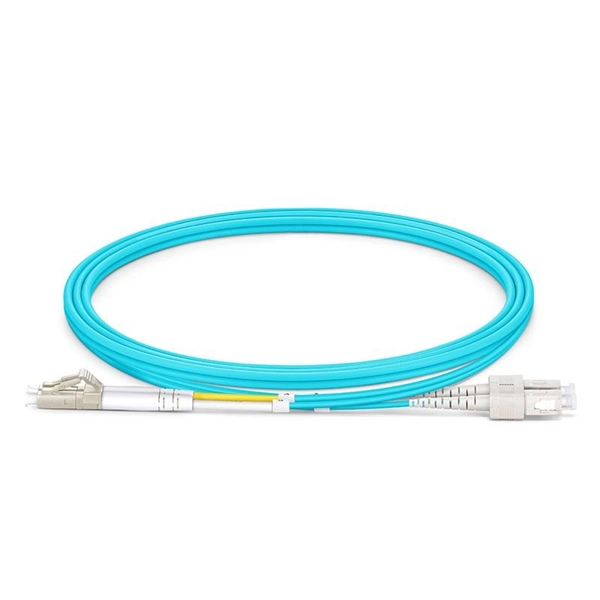
EXF OPTICALNetwork components Project brief
Optical reference library

Production of Communication-Related Optical Components and Modules

Production of Communication-Related Optical Components and Modules
Illustrative equipment reference
Download PDF
Article contents

Communication-related optical components and modules are produced using advanced materials, precision fabrication, and integration technologies to support high-speed, high-capacity optical networks.

Key Components and Modules

Optical communication networks rely on a variety of components and modules, including: Optical Transceivers: Convert electrical signals to optical signals and vice versa, supporting high-speed data transmission in data centers and telecom networks. Modern transceivers use coherent optics, WDM, and silicon photonics for efficiency and scalability, with speeds reaching 400G and 800G per module. Modulators: Devices like Mach-Zehnder modulators and silicon microring modulators encode data onto optical carriers.

Recent advances include sub-THz plasmonic modulators and high-bandwidth silicon modulators for ultra-fast transmission. Photodiodes and Tap-PD Modules: Detect optical signals and monitor power levels. Integrated photodiodes with tap or WDM functions provide compact, high-performance solutions for network monitoring.

Wavelength Division Multiplexing (WDM) Components: Thin-film filters, arrayed waveguide gratings (AWG), and interleavers enable multiplexing and demultiplexing of multiple wavelengths for efficient fiber utilization. Optical Switches: MEMS-based or optomechanical switches allow dynamic routing, protection, and add/drop functionality in networks, including Colorless-Directionless-Contentionless (CDC) applications. Passive Components: Isolators, circulators, couplers, and polarization-maintaining (PM) components ensure signal integrity, prevent back-reflection, and support branching and amplification.

Production Technologies

The production of optical components involves specialized processes distinct from conventional electronics: Materials Technology: High-purity substrates (e.g., alumina, quartz) and advanced thin films are used for modulators, photodiodes, and isolators. Precision Fabrication: Nanometer-scale patterning, MEMS assembly, and wafer-level processing enable miniaturization and high-density integration. Integration and Modularization: Combining multiple functions (e.g., isolator with WDM or PM) into compact modules improves performance and reduces footprint.

Testing and Evaluation: Optical performance, reliability, and environmental stability are verified using advanced simulation and measurement techniques. Advanced Packaging: Coherent transceivers and high-speed modulators require precise thermal management, alignment, and low-loss fiber coupling.

Industry Trends

Miniaturization and High-Density Integration: Components are increasingly compact to support dense data center interconnects and metro networks.

High-

Speed and Coherent Transmission: Digital coherent optical transmission and advanced modulators enable long-distance, high-capacity links. Automation and Scalability: Production lines leverage automated assembly, wafer-level processing, and MEMS integration to meet growing demand. Global Market Growth: The optical transceiver market is projected to grow significantly, driven by 5G deployment, cloud computing, and AI-driven data traffic.

Conclusion

The production of communication-related optical components and modules combines advanced materials, precision fabrication, integration, and testing technologies to meet the demands of modern optical networks. Key devices such as transceivers, modulators, photodiodes, WDM components, and MEMS switches are essential for high-speed, reliable, and scalable communication infrastructure, with ongoing innovations in miniaturization, coherent optics, and modular integration driving the industry forward.

Analysis of the production process diagram for optical communication. The production of these chips is a complex multi-step process involving semiconduct.

From reference to enquiry

Questions for your project

Use these editorial prompts alongside the linked excerpts. They identify items to confirm for your project.

Detailed reading

Distribution and installation references

Analysis of the production process diagram for optical communication

The production of these chips is a complex multi-step process involving semiconductor fabrication, photonics, packaging, and module assembly. Understanding this production workflow is

The Most Comprehensive Guide Of Optical Modules

At Asterfusion, we specialize in producing and selling enterprise SONiC-based open network switches and optical modules, as well as active optical cables, direct-connect copper cables,

Development of optical components and modules designed for next

In preparation for a next generation optical communication/optical transmission system, not only miniaturization, high integration, and energy saving but also excellent quality, performance, and

LSOLINK Optical Transceiver Manufacturing Process

This article provides a comprehensive overview of LSOLINK''s core production and quality control process for optical modules, from raw

A Miniaturized Optical Communication Module: Design, Development,

This paper aims to design and manufacture a miniaturized optical communication module. This module integrates functions such as light source, optical signal detection, signal processing, and transmission.

Understanding Optical Modules: Working Principles, Structures, and

Explore the working principles, structures, and performance metrics of optical modules, essential components of optical fiber communication systems. Learn about key indicators such as

Optical module – A comprehensive exploration

As an important link in data transmission, optical module technology is indispensable for optical communication and plays the role of the cornerstone of communication.

Optical Communication Device Production and

Modular instruments provide fast, flexible, and cost effective optical device testing solutions to ensure you maintain a competitive advantage in the optical

ITPro Today, Network Computing, IoT World Today combine

ITPro Today, Network Computing and IoT World Today have combined with TechTarget . The page you are looking for may no longer exist.

WORLD WIDE WEB JOURNAL Home

Internet communications tools Document preparation Computing industry Computing standards, RFCs and guidelines Computer crime Language types Security and privacy Computational complexity and

Product Drawings Resource Center | Optical Communications | Corning

Corning provides a variety of optical hardware component drawings. Choose from two-dimensional and isometiric product drawings in PDF, DXF, VSS formats, and Building Information Modeling (BIM)

Thomas Insights

Thomas Insights - U.S. Manufacturing and Industrial News US Approves Ukraine License to Manufacture Patriot Air Defense Systems The US will grant Ukraine a license to manufacture

The Evolution of Optical Modules: Powering the Future

Data centers, the beating hearts of this digital revolution, are tasked with processing and moving massive volumes of data at unprecedented speeds.

10 companies in the optical transceiver industry chain 2024

The rapid development of AIGC has promoted the demand for 800G optical modules, and the entire industrial chain involving optical components,

Connectors, Cables, Optics, RF, Silicon to Silicon

Samtec is the service leader in the electronic interconnect industry and a global manufacturer of Connectors, Cables, Optics and RF Systems, with full channel

Optical communication components

We review and contrast key technologies developed to address the optical components market for communication applications. We first review the component requirements from a network

The Key External Components of Optical Modules

An optical module serves as the backbone of modern fiber-optic communication. Its appearance often resembles a compact rectangular device, designed to fit seamlessly into

The Most Comprehensive Guide Of Optical Modules

What is an optical module? The optical module serves as a crucial component in optical fiber communication systems, operating at the physical

Related Video Reference

This video was associated with the source search result. Verify technical details against current product documentation and project requirements.

Discuss your network project

Share the route, interfaces, cable or port requirements and acceptance scope.

Start a Project Enquiry